
Playing Attention
Toying with the work of make believe

Friends!
Let’s take seriously the phrase “make believe.” Reflect a moment on these words, and you’ll notice their implication: we can make ourselves believe. This is a type of making (a craft?) that I took for granted as a kid, then somehow managed to forget. You mean I can make beliefs? Fashion them out of sensations into whatever shape I desire? Say “I’m not Henry, I’m a cactus” and, if my craft of belief-making is rigorous and attentive enough, something actually prickles in my felt world for a fleeting moment?
Diane Ackerman, in her book Deep Play, provides us with the etymologies of other play-adjacent words. Rapture means to be “lifted up as if by a giant hunting bird,” or raptor (hence “The Rapture,” in which feather-winged angels pluck up chosen souls to deliver them to paradise), while ecstasy is to “stand outside oneself — with connotations of both profound freedom and divine possession. Speaking of possession, to be enthusiastic, in its ancient Greek roots, is to be “inspired or possessed by a god.”
Something shocking begins to bubble up from these word histories: play appears to be (could it be?) quite serious. Even sacred. It appears to be, in fact, the method by which we (even temporarily) shake ourselves free from identities, stories, beliefs, worlds, and experiences that calcify us into stagnant parroters of whatever made beliefs have been imposed on us by systems of power. This tracks with play’s own etymology: the play of an object is its plasticity, its flexibility, its ability to shapeshift.
So remember this: those who want you to stay in only one shape never want you to play. The Roman Empire aggressively prosecuted Greek ecstasy; not much changed under today’s empires. This makes play a revolutionary act. To play is not only to declare that a different world is possible, it is to step into that world for the length of play.
In this issue, we’re spending time on play. In Visions of Attention, Haena directs our gaze to Katie Paterson’s ecliptic disco ball, a playful representation of space-time vastness. In Practice in Practice, Alice reflects on a practice of Johan Huizinga’s Magic Circle as a space where play becomes possible. And in Stuff for Study, Czarina shares stories of reimagination through live-action roleplaying and the role of play in evolution.
Speaking of play – we’ll be at Pioneer Works’ annual Press Play book fair this weekend. We’d love to see you there!
Yours in this infinite game,
Henry R. Kramer
Academic Dean
Visions of Attention
An archive of images and mini-essays on the myriad modes of attention

Grooves in Spacetime
This is no ordinary disco ball. Once illuminated in a dark room, Totality (2016) by Katie Paterson projects images of 10,000 solar eclipses documented throughout history. And those are just ones that humans have spotted — what of the eclipses witnessed by primates, dinosaurs, or early marine plants whose photoreceptors beheld the dimming sky through the briny slosh of prehistoric seas?
In another work titled 100 Billion Suns (2011), Katie Paterson represents in a volley of colorful confetti the 3,216 gamma-ray bursts so far recorded in space, each emitting a luminosity equal to 100 billion suns.
Paterson’s work demonstrates the capacity of play to facilitate personal relationships with the cosmic. Through groovy shiny things and bright colors, she suggests, we can disarm the terror of vast timescales and endow transience with its own beauty. Like all play that starts and inevitably ceases, the disco ball will stop spinning at the end of the night and confetti will fade underfoot nearly as soon as it explodes. Even grandiose events like eclipses and gamma-ray bursts are, when reduced to bare fundamentals, a simple play of light and dark.
— Haena Chu
Practice in Practice
Reflections on experiments in Attention Activism
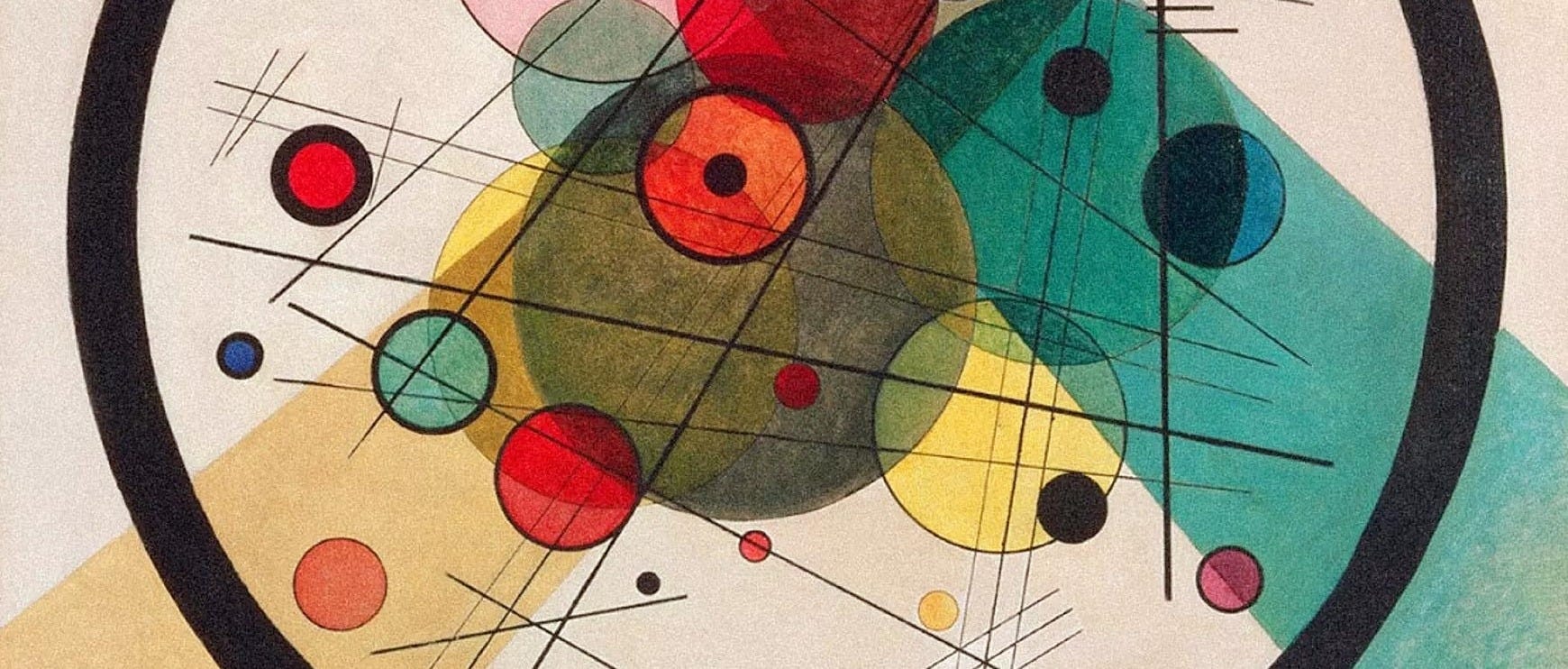
On a cold, rainy evening the night before Thanksgiving, seven Attention Activists gathered in Bushwick to study the “magic circle,” Johan Huizinga’s term for the bounded space in which play becomes possible. Kyle and I paired an excerpt from Huizinga’s 1938 text, Homo Ludens, with David Graeber’s view of play as one of the most fundamental (and most scientifically elusive) forms of animal behavior. Bringing these ideas together, we invited ourselves to become human animals capable of creating tiny, temporary worlds of our own.
As we explored the streets, something unexpected happened: some participants sought literal circles, while others imagined more abstract boundaries, subtle rules and invisible structures that shape our actions without being named. The gap between these interpretations became its own site of play. What counts as a circle? Who decides its perimeter? How do rules emerge, and when do they dissolve?
Conversation shifted to how play bends and subverts rules, navigates social expectations, and awakens a sense of delight. This study reminded me that play depends not just on space but on attention — on noticing, following, bending rules, and sensing how focus shifts between self and others.
I’ve been thinking since our study about the tension between play and analysis — how reflection can harden the softness that makes play possible, and how thinking about play lightly can itself be a form of play. It made me aware of the invisible circles I move through each day, and the ones I create: small, local worlds that need no purpose to matter.
— Alice Wu (in partnership with Kyle Barnes), SoRA Study Corps
Stuff for Study: The Thought of Play
Readings and other resources for continued learning on attention and politics
What’s the point if we can’t have fun? — David Graeber for The Baffler
On the shortfalls of “awareness raising” video games — Marijam Did for Literary Hub
Play as evolutionary advantage — Andreas Wagner for Nautilus
The world reimagined by live-action roleplaying — Alexa Clay for Aeon
Tony Hawk’s Pro Skater and the endless possibilities of cities — Jack Sheehan for the New York Times Magazine
— Czarina Ramos
IRL
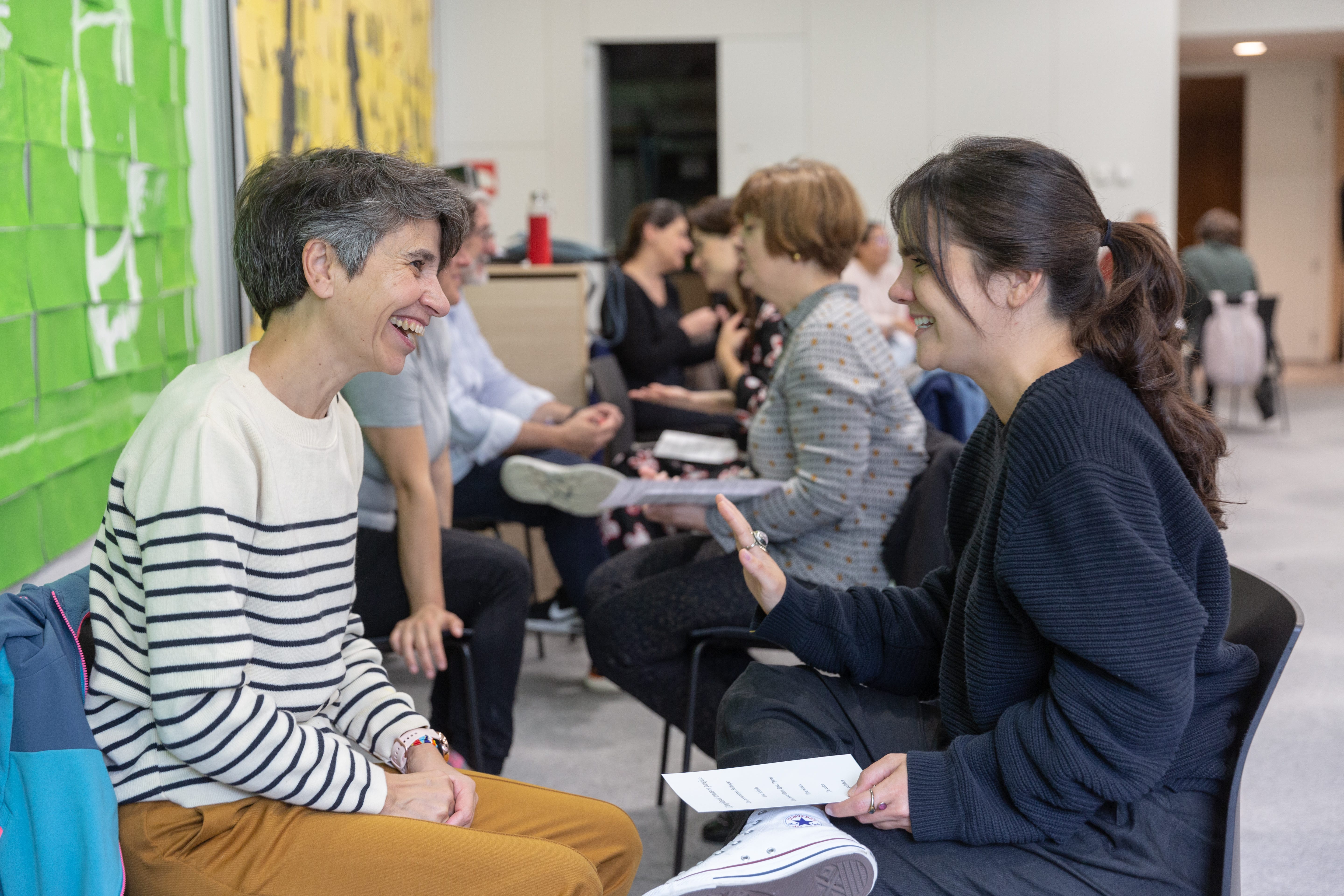
Sat, December 13th & Sun, December 14th: Join us for Pioneer Works’ annual Press Play book fair. Keep an eye out for SoRA’s team as we showcase our most iconic literature and printed art.
Find more workshops, events, and gatherings here!