

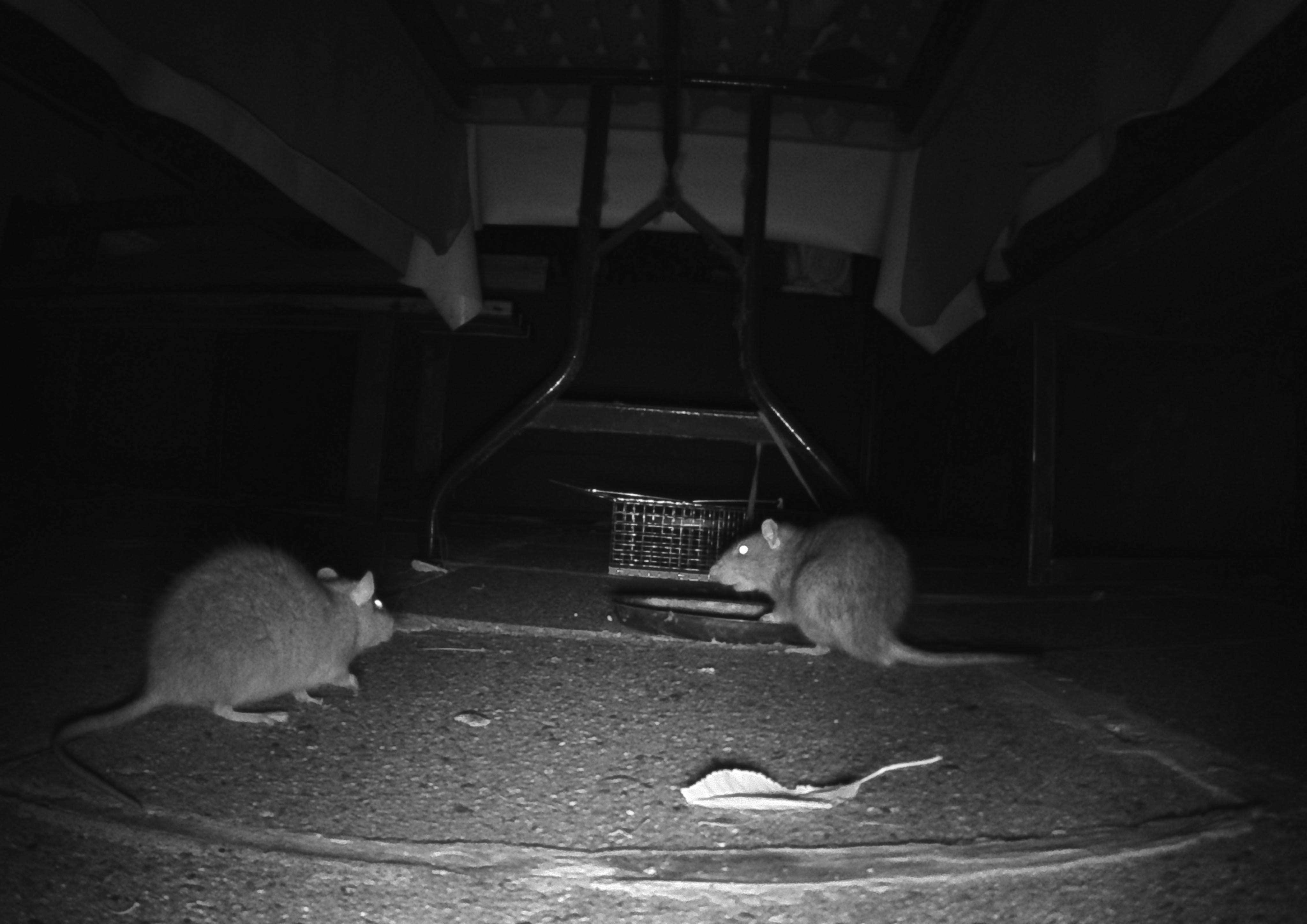
A rat scurries across your path as you walk out of the subway station at night. A cockroach emerges from underneath your bathroom sink when you go to brush your teeth. A flock of pigeons descend upon your cracked-open window.
Did you feel yourself squirm when you read these statements? Did your eyebrows rise, your nose wrinkle, your stomach churn?
Charles Darwin proposed in The Expression of the Emotions in Man and Animals that disgust serves the evolutionary purpose of alerting us to health hazards. Individuals more alert to the possible dangers of disease-carrying food or a threatening creature were more likely to survive and pass on their genes. But what happens when disgust responses outgrow their evolutionary function? Is it possible for us to attend to our experience of disgust, and trouble it? Or even turn it into fascination?
In a time where our attention is bought and sold, the beings that evoke our disgust make for compelling foils to the gleaming digital surfaces engineered to canalize our most visceral desires.
As a socially learned emotion, disgust can become an abstracted, embodied moral judgement towards the “other.” This gets sinister; the Nazis frequently compared Jews to cockroaches and rats in order to manufacture consent for genocide. But such comparisons would hold less power if we learned to better connect with and grow alongside our nonhuman neighbors: rats, pigeons, and cockroaches. As scavengers, these creatures follow close behind wherever humans have made their home. In this manner, they are the shadows of our civilization. And isn’t it a sign of paranoia to be afraid of your own shadow?
In a time where our attention is bought and sold, the beings that evoke our disgust make for compelling foils to the gleaming digital surfaces engineered to canalize our most visceral desires. The disgusting creature or object confronts us with its impurity, driving us to rid ourselves of the disgusting thing. In this way, disgust walls us off from curiosity, connection, and understanding.
A different relationship to vermin is possible. In exploring it, we might also find the beginnings of a new relationship to urban ecology, to the city as a whole, and even to our own attention.
This June, Chimeras Collective (of which I am one half; Olivia Tai is the other) is leading an in-person seminar on CREATURES at the School of Radical Attention. Our mission is to trouble the boundaries of our own disgust towards our nonhuman neighbors. Kinship with the more-than-human starts here, in the natural world that already surrounds us — even if we sleep better when we pretend like it doesn't.
Here’s an attention practice for you: next time you find yourself in a chance encounter with a rat, pigeon, or cockroach, spend five minutes with the creature (if it will have you). Notice how it moves, how it communicates, where it goes. Ask yourself what it might be feeling, or experiencing. Maybe it’s hungry, maybe it’s angry, maybe it’s scared. Maybe, in spending this time together, you might see past your own knee-jerk response. Attend to your own feelings of disgust. With any luck, what seems like a simple repulsion will transmute into a more complicated fascination with how the other half lives.
Kyle Barnes is an artist, UX designer, facilitator and writer. He is also one-half (alongside Olivia Tai) of the Chimeras Collective, which creates interspecies encounters in NYC and beyond. The Chimeras Collective are leading a seminar on CREATURES at the School of Radical Attention from June 10th to 24th.